
Best SD Cards For Bambu Lab A1
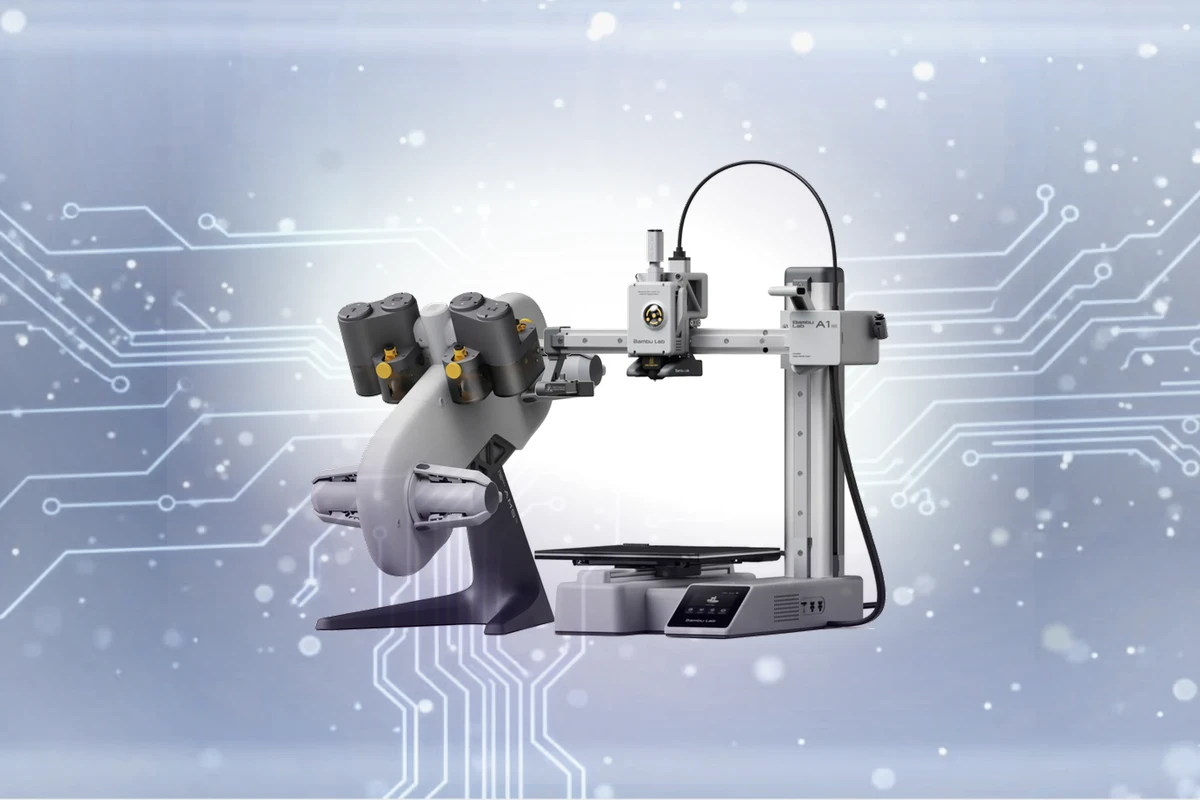
Expert recommendations based on Bambu Lab A1 mini specifications
Recommended Spec
microSD (UHS-I) (Class 10 / U1 or faster)
The A1 mini prints from a microSD card and shares the whole Bambu storage workflow: Bambu's own wiki calls for a card formatted FAT32 and rated at least Class 10 / U1 (10 MB/s), and officially supports up to 2TB if you format it on the printer.
Contains affiliate link
#1 Top Pick for Bambu Lab A1 mini
View Top Recommendation
Check Price
Official Bambu Lab A1 mini SD Card Requirements
-
Format: microSD (UHS-I)
-
Minimum Speed: Class 10 / U1 (10 MB/s write)
-
Maximum Capacity: Up to 2TB (FAT32)
Why these requirements? The A1 mini prints from a microSD card and shares the whole Bambu storage workflow: Bambu's own wiki calls for a card formatted FAT32 and rated at least Class 10 / U1 (10 MB/s), and officially supports up to 2TB if you format it on the printer. The card never bottlenecks print quality. What matters is integrity. The A1 mini's one quirk worth knowing: the slot is not hot-swappable, so you should always safely eject the card from the menu before pulling it, or you risk corrupting files and failing the next print. A genuine 32-64GB SanDisk or Samsung card is the right call.
Detailed Specifications
Type
microSD (UHS-I)
Min Speed Class
Class 10 / U1
Write Speed
10 MB/s
Recommended Size
32GB, 64GB
Max Capacity
2TB (FAT32)
Top SD Card Recommendations
This website contains affiliate links. We may earn a small commission when you purchase through our links at no extra cost to you.
| SD Card | Verified | Speed Class | Write Speed | Pros | Price |
|---|---|---|---|---|---|
SanDisk Ultra microSD
Full Review
|
V10 | Up to 20 MB/s |
|
$ Check Price | |
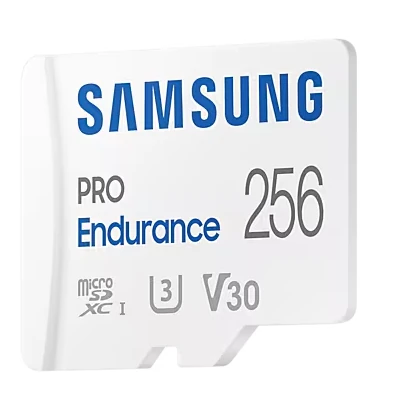
Samsung EVO Select (Blue)
|
V30 | Up to 60 MB/s |
|
$ Check Price | |
|
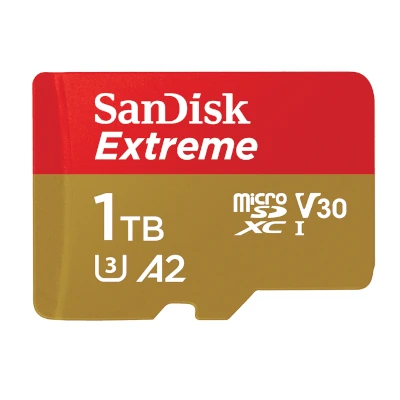
SanDisk Extreme microSD
Full Review
|
V30 | Up to 130 MB/s |
|
$ Check Price |
Compare These Cards
Open in full compare toolSee how the recommended cards for Bambu Lab A1 mini stack up side by side, or swap in any other card.
budget
View on Amazon
SanDisk Ultra microSD
$ · Budget- UHS RatingUHS-I
- Speed ClassV10
- App PerformanceA1
- Read SpeedUp to 195 MB/s
- Write SpeedUp to 20 MB/s
- EnduranceStandard
Available Capacities32GB, 64GB, 128GB, 256GB, 512GB, 1024GB, 1500GB
Pros
- Cheap
- reliable
- huge capacities available.
Cons
- Too slow for 4K video.
budget
View on Amazon
Samsung EVO Select (Blue)
$ · Budget- UHS RatingUHS-I
- Speed ClassV30
- App PerformanceA2
- Read SpeedUp to 130 MB/s
- Write SpeedUp to 60 MB/s
- EnduranceStandard
Available Capacities64GB, 128GB, 256GB, 512GB
Pros
- Best value for money. Excellent 10-year warranty.
Cons
- Slower write speeds than SanDisk Extreme.
recommended
View on Amazon
SanDisk Extreme microSD
$ · Mid-Range- UHS RatingUHS-I
- Speed ClassV30
- App PerformanceA2
- Read SpeedUp to 190 MB/s
- Write SpeedUp to 130 MB/s
- EnduranceStandard
Available Capacities32GB, 64GB, 128GB, 256GB, 512GB, 1024GB, 1500GB
Pros
- The gold standard. Fast
- reliable
- A2 rated
- and widely available.
Cons
- Write speeds are slower on 32GB/64GB capacities.
SanDisk Ultra microSD
The SanDisk Ultra microSD is a high-volume budget pick offering read speeds up to 195 MB/s for quick transfers and app loading. Its lighter write performance and V10 rating make it better suited to photos and everyday storage than sustained 4K video.
Target User:
Budget-conscious smartphone and tablet users who want fast file transfers without 4K video demands
Best For:
Smartphones & Tablets, Dash Cams, Drones
Upgrade to the SanDisk Extreme microSD if you need V30-rated write speeds for 4K video; stick with the Ultra for photos and casual use where price is the priority.
SanDisk Extreme microSD
The SanDisk Extreme microSD is the best-selling microSD card on Amazon, pairing V30 video speed with A2 app performance and read speeds up to 190 MB/s. It's a dependable all-rounder for 4K recording, app storage, and everyday file transfers, with capacities ranging from 32GB up to 1TB.
Target User:
Smartphone, drone, and action camera users who want one reliable card for both 4K video and app storage
Best For:
Action Cameras, Drones, Smartphones & Tablets, Mirrorless Cameras
Step up to the SanDisk Extreme PRO for higher sustained write speeds, or down to the Samsung EVO Select if 4K recording isn't a priority and price matters more.
Featured Products on Amazon
This website contains affiliate links. We may earn a small commission when you purchase through our links at no extra cost to you.

Kingston Canvas Go Plus 128GB microSD Card | Up to 200MB/s | Class 10, UHS-I, U3, V30, A2 | SDCG4/128GB
Check Price
View on Amazon

Kingston Canvas Go Plus 64GB microSD Card | Up to 200MB/s | Class 10, UHS-I, U3, V30, A2 | SDCG4/64GB
Check Price
View on Amazon

SANDISK 128GB Extreme microSD UHS-I Card - Up to 245MB/s Read Speed and 120MB/s Write Speed, 5.3K Video, 4K UHD Video, high-Performance for Action cams, Drones, Android Devices - SDSQXH9-128G-GZ6MA
Check Price
View on Amazon
Frequently Asked Questions
What SD Card Do I Need for Bambu Lab A1 mini?
The Bambu Lab A1 mini requires a microSD (UHS-I) card with Class 10 / U1 speed rating for reliable performance. We recommend 64GB capacity as the sweet spot balancing storage capacity with affordability. The device supports up to 2TB (FAT32), though most users find 64GB sufficient for daily use. Always choose from trusted brands like SanDisk, Lexar, or Kingston to ensure consistent performance and avoid data loss.
What microSD card format does the Bambu A1 mini need?
FAT32. Windows formats cards over 32GB as exFAT by default, which the A1 mini won't read reliably, so either use a 32GB card, or format a larger card to FAT32 directly on the printer (Bambu supports up to 2TB this way). At least Class 10 / U1 is recommended.
Why does my A1 mini SD card get corrupted?
The A1 series slot is not hot-swappable. If you yank the card without ejecting it, files can corrupt and the next print can fail. Always use the 'safely eject' option in the menu before removing the card. This is the single most common cause of A1 mini card problems.
Does the A1 mini need a fast or large card?
No. Print files are tiny and the card isn't a speed bottleneck, so a standard Class 10 / U1 card is plenty and a huge capacity is wasted money. A genuine 32-64GB SanDisk or Samsung card is the sweet spot.
Is Class 10 / U1 required for Bambu Lab A1 mini?
Yes, Class 10 / U1 is recommended for Bambu Lab A1 mini. It guarantees a minimum sustained write speed of 10 MB/s, which is necessary for stable recording without dropped frames or errors.
What storage capacity should I get for Bambu Lab A1 mini?
We recommend 32GB or 64GB cards. A 32GB card is good for typical use, with 2TB (FAT32) as the maximum supported capacity. Larger sizes are useful if you shoot frequently and want to minimize card swaps.
Can I use older or slower cards with Bambu Lab A1 mini?
Not recommended. Cards slower than Class 10 / U1 may cause dropped frames, corrupted files, or recording failures. Always use Class 10 / U1 minimum for reliability.
Do I need a UHS card for Bambu Lab A1 mini?
UHS cards are recommended for best performance with Bambu Lab A1 mini. Non-UHS cards will work but may have slower transfer speeds. For this device, UHS-II is optimal.
Does the brand matter for Bambu Lab A1 mini?
Yes, trusted brands like SanDisk, Lexar, and Kingston are recommended. Quality brands have better reliability and warranty support. Avoid unknown brands, especially for demanding devices.
What happens if I use the wrong card with Bambu Lab A1 mini?
Using cards slower than Class 10 / U1 can cause: dropped frames during recording, corrupted files, or complete recording failure. Stick to Class 10 / U1 minimum to avoid data loss.
How long will an SD card last with Bambu Lab A1 mini?
Quality SD cards typically last 3-5 years with normal use. Replace your card if you experience read/write errors, corrupted files, or if it's been dropped or exposed to extreme conditions.